what nails to use fir overlayment on concrete
1 / 51
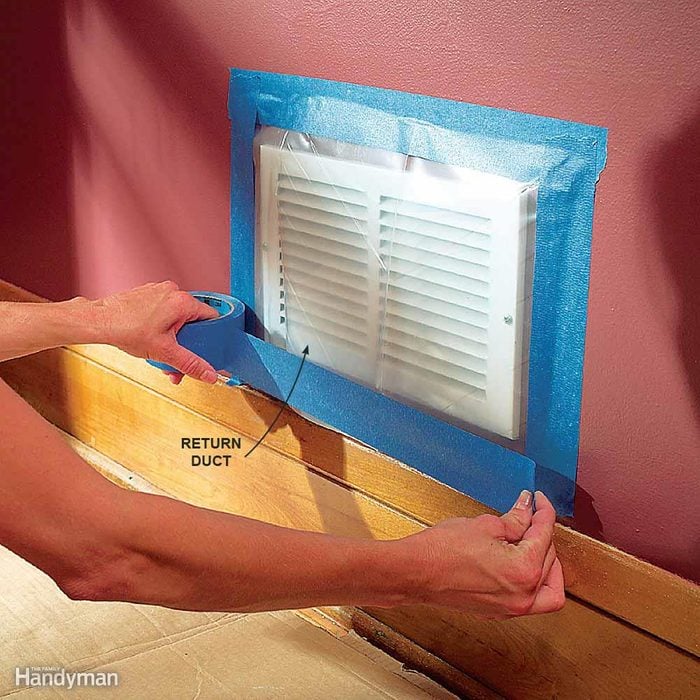
Cover Up Air Ducts
Structure dust sucked into return air ducts tin can plug your furnace filter. Even worse, small particles can pass through the filter and glaze every room in the business firm with a blanket of fine dust when the blower turns on. Air supply ducts can be a trouble too—grit that settles inside will come blasting out when your heating/cooling organization starts upwards. You can shut the damper on a supply register, but it won't seal out dust every bit effectively as plastic and tape. Note: Plow off the heating/cooling system while the ducts are covered. Operating the system with restricted airflow can damage it. Plus: Check out these round ductwork installation tips.
2 / 51
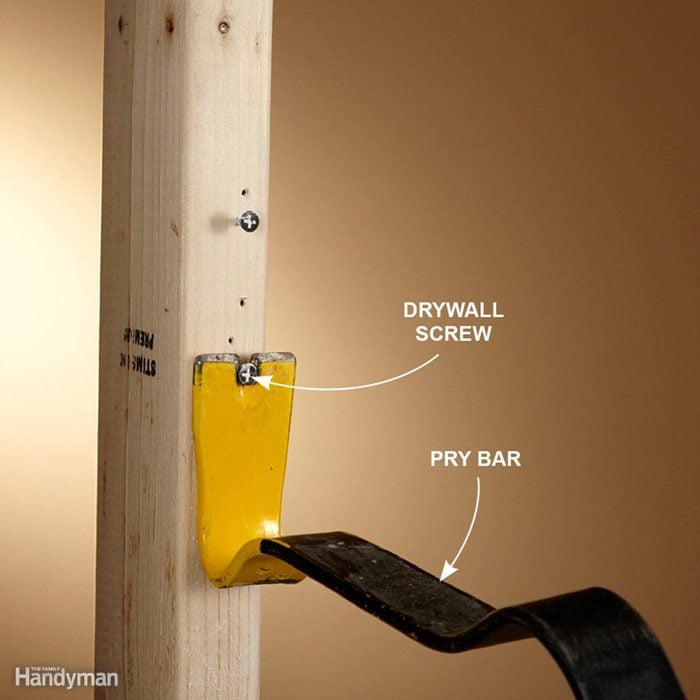
Pull Drywall Screws
When you pull drywall from a wall, the screws usually stay in the studs. Unscrewing them with a drill is not the most efficient way to remove them considering the spiral heads are usually deteriorated or full of drywall mud. Use a pry bar or your hammer claw to pull them out just like you would with nails. Drywall screws are brittle, so if some joker used three-in. screws to install the drywall, snap them off with your hammer. When yous're ready to hang drywall once more, check out how to drive drywall screws similar a pro.
3 / 51

Remember to Wear Safety Glasses
Since safety spectacles are cheap, there's no reason every DIYer shouldn't accept a pair. There are a variety of styles, including bifocal safety spectacles. Wraparound glasses offer maximum protection and both anti-glare and tinted glasses are available. Proceed a few pair around and so at that place'due south always 1 within accomplish.
iv / 51
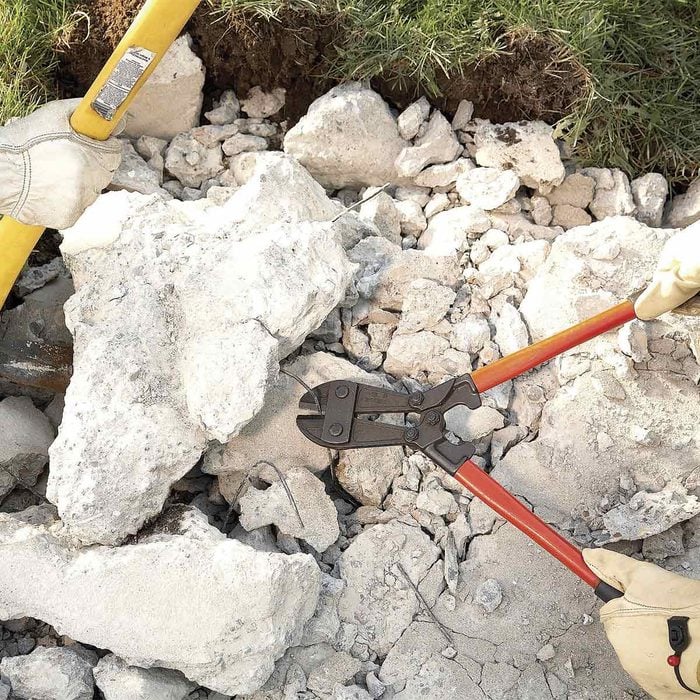
Snip Reinforcement Wire in Concrete
Snip through wire mesh to split chunks of concrete. Bolt cutters are the best tool for this job; don't even try using a wire cutter.
half dozen / 51
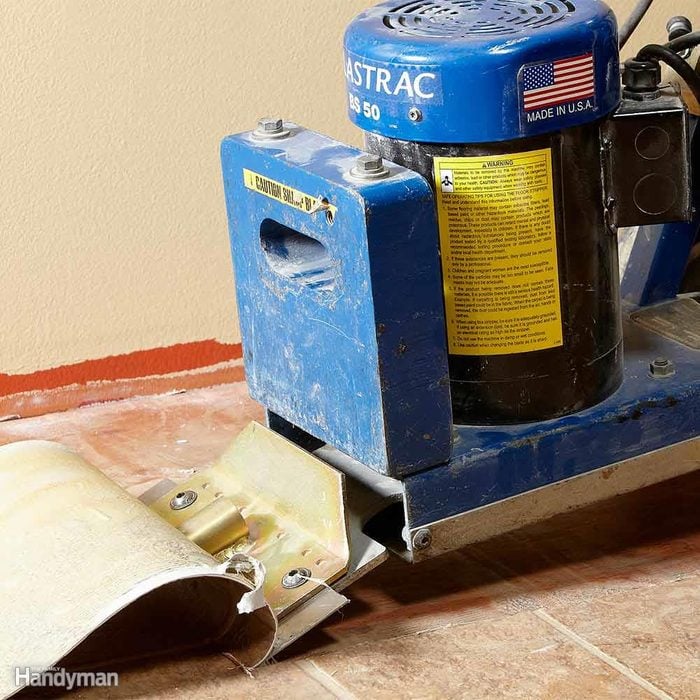
Rent a Walk-Behind Floor Scraper
Some old vinyl sheet or tile floors are super easy to pull up. Others are and then thoroughly glued downward that you lot're lucky to remove quarter-size chunks with every whack of your handheld floor scraper. If a shovel and mitt scraper are just not getting the task washed in your kitchen demolition, rent a walk-behind scraper. For about $l to $lx a day, you can save yourself a bunch of time and forestall a whole lot of wear and tear on your back and wrists. Many flooring scrapers accept an attachment for busting up ceramic tiles as well.
8 / 51
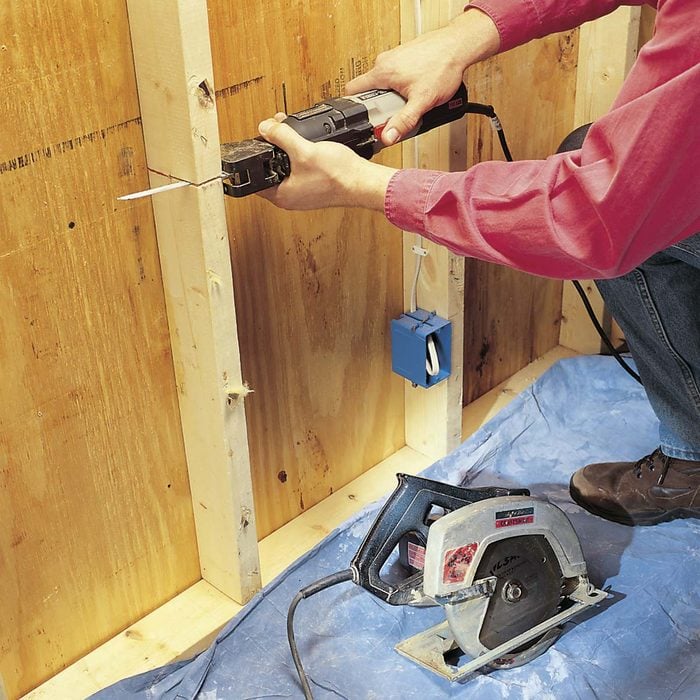
Cutting Studs
Cut through wall studs fast. First, make a pass with a circular saw at its deepest bract setting and so finish the cut with the recip saw. The round saw rapidly does the bulk of the cutting. Its saw cut acts equally a guide and starts the recip bract running level. Ease upwardly pressure every bit you get close to the plywood; your bract tip could kick back. Annotation: Watch out for electrical cablevision and plumbing pipes.
10 / 51
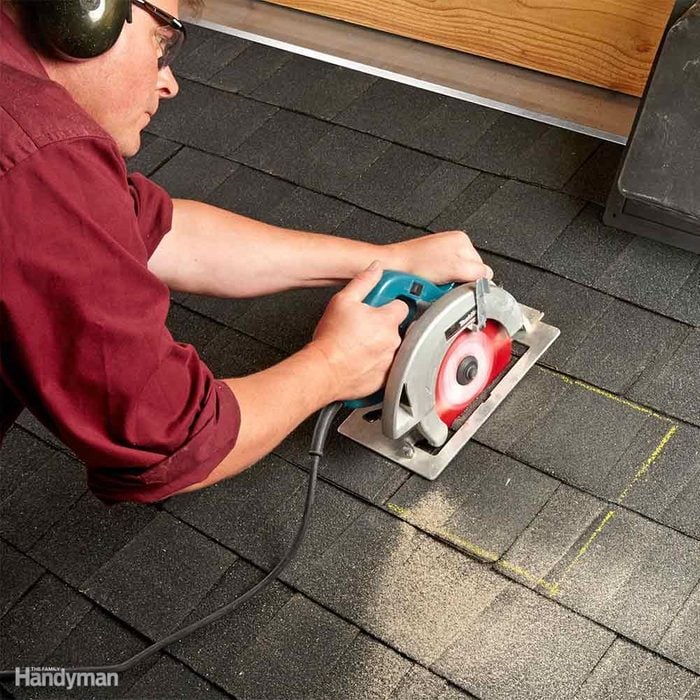
Cut Information technology Upwardly With a Round Saw
Sledgehammers, pry bars and reciprocating saws aren't the merely demo heroes on the chore site—your round saw can be used for a heck of a lot more than cutting studs and sheets of plywood. Fitted with the correct blade, your circular saw can cut upwardly covering, tin, concrete, rebar, steel doors and cobweb cement. With a demo blade, you tin cut upwards nail-embedded debris all twenty-four hours long.
12 / 51
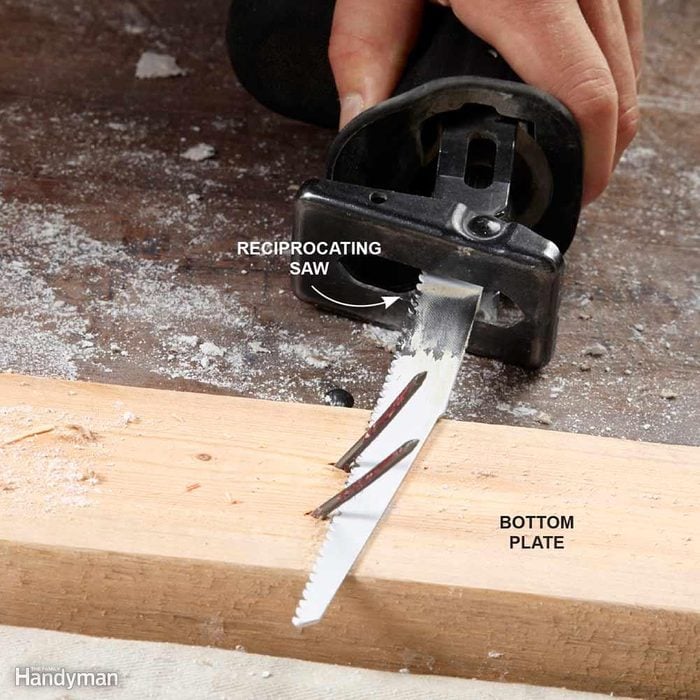
Cut Off the Nails On the Plates
Afterward you've bashed the studs out of place, use a reciprocating saw to piece off the nails that held them down. Even if you're not planning to reuse the plates, it's a good way to avoid stepping on a nail. Make certain yous use a bimetal saw blade; it'll slice right through the nails.
14 / 51
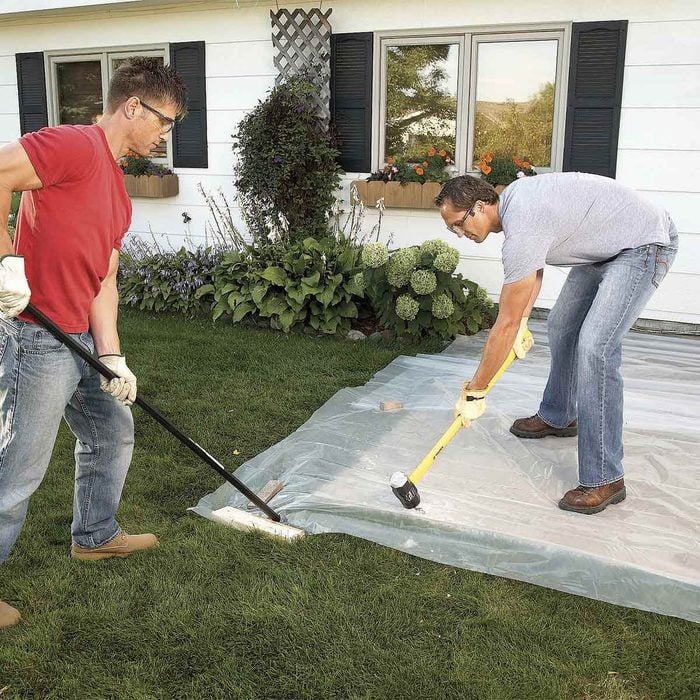
Embrace a Concrete Slab
When breaking up a concrete slab, cease flying chunks of shrapnel with a sheet of plastic. Jagged chunks of concrete can damage siding and intermission windows, and it's a real chore to clean up.
16 / 51
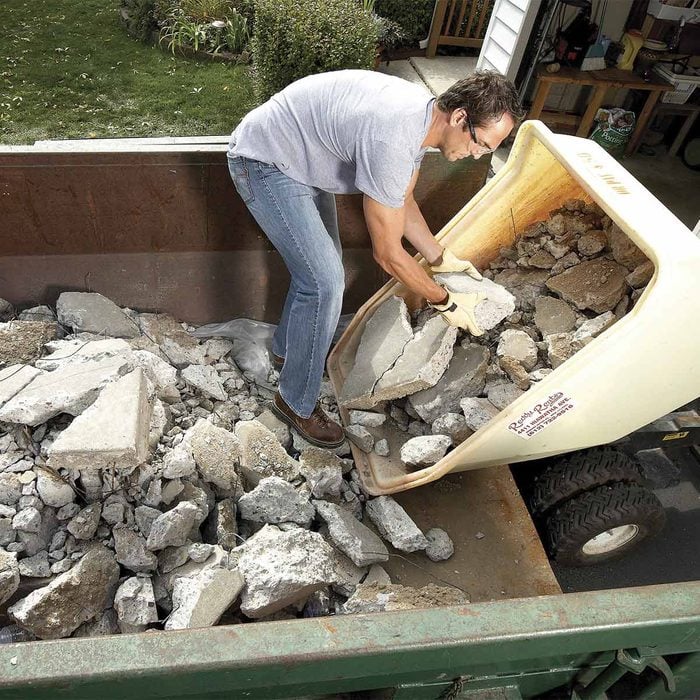
Trash Container with Gate
eighteen / 51

Removing a Door Jamb
Remove a door jamb from its opening with a reciprocating saw by cut the jamb's finish nails. This also works with window jambs. Grip the boot firmly when y'all can't rest the pivoting shoe against the jamb.
20 / 51
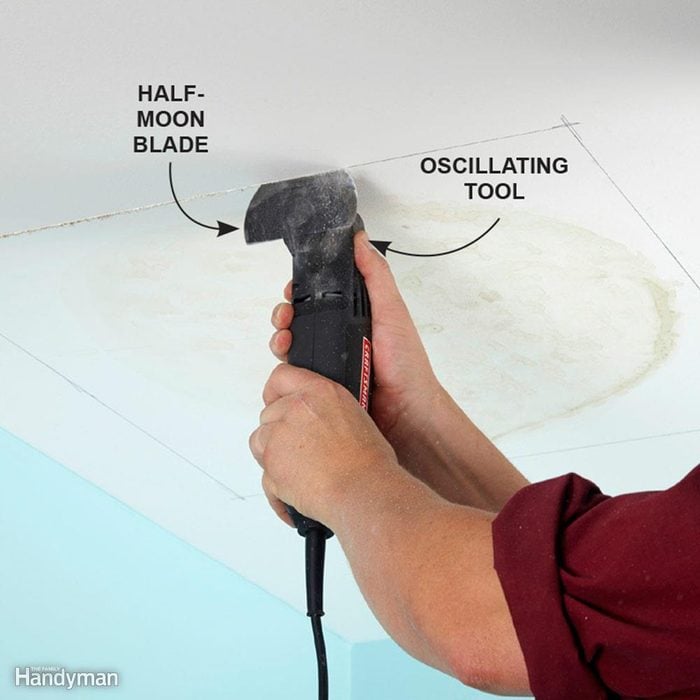
Piece Up Drywall With a Multitool
There seems to exist no end of odd jobs that tin can be washed with an oscillating tool, and here's some other one: If you lot accept to remove a department of damaged drywall, cut it out with a multitool equipped with a one-half-moon bract. The tool will cut almost equally fast every bit you can pull information technology. And because the oscillations on the blade are so short and the teeth are then fine, the tool creates one-half the dust of a reciprocating or keyhole saw. Plus, the recess you cut volition exist much straighter and cleaner, making the patching piece of work much easier.
22 / 51
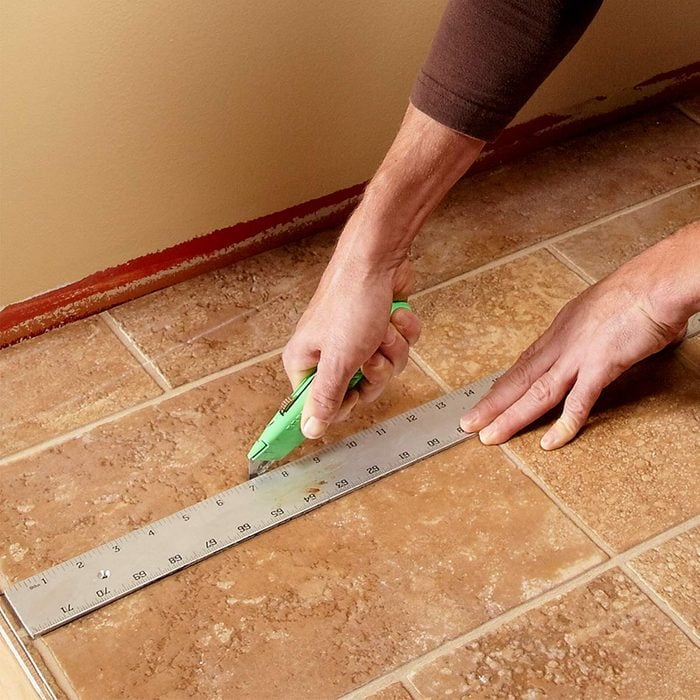
Demo Vinyl Flooring
Measure out 10 in. from the wall and score the vinyl flooring with a utility knife. Then repeat scoring every 10 in. all the way across the room. Steer a power scraper down the scored swath and let it do all the work. Let the stripped vinyl coil upwardly in front of the scraper blade if you're doing kitchen demolition piece of work or bathroom renovations.
23 / 51
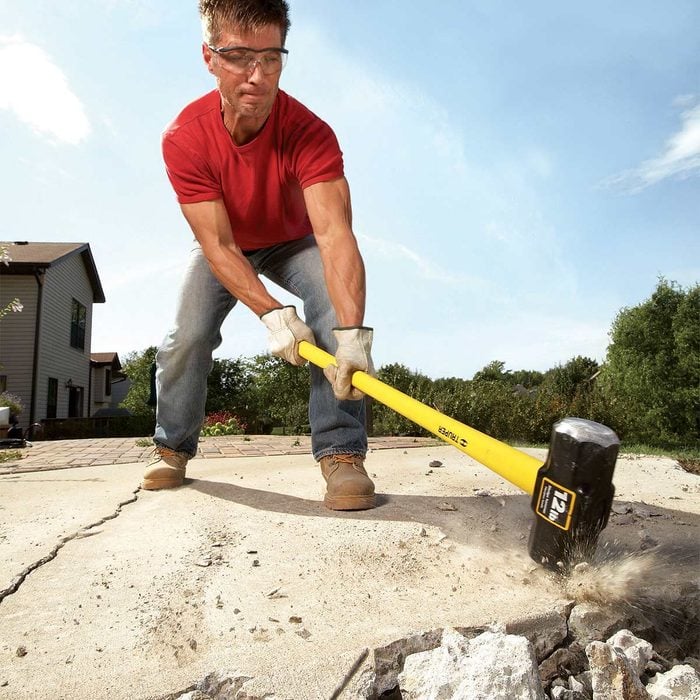
Sledgehammer
A sledge can be surprisingly effective in breaking up a concrete slap to most four-in. thick, more manageable pieces. Requite it a endeavor first, before moving on to heavier rental equipment.
24 / 51

Recollect to Wear Work Boots
Work boots come in a variety of styles for just near every DIY project. Work boots volition give you a sturdy, no-slip platform, but they should also exist comfortable. If you need extra toe protection but don't want the weight of steel-toed boots, await for boots with composite toe protection because they're lighter.
25 / 51

How to Remove Carpeting Yourself
Depending on where you live, an installer will charge $3 to $5 per square yard for tear-out. By removing the carpet from a 12 x xv-ft. room, y'all'll relieve $60 to $100 for an hour's work. Talk to your installer to find out exactly what you lot'll save past doing it yourself.
26 / 51
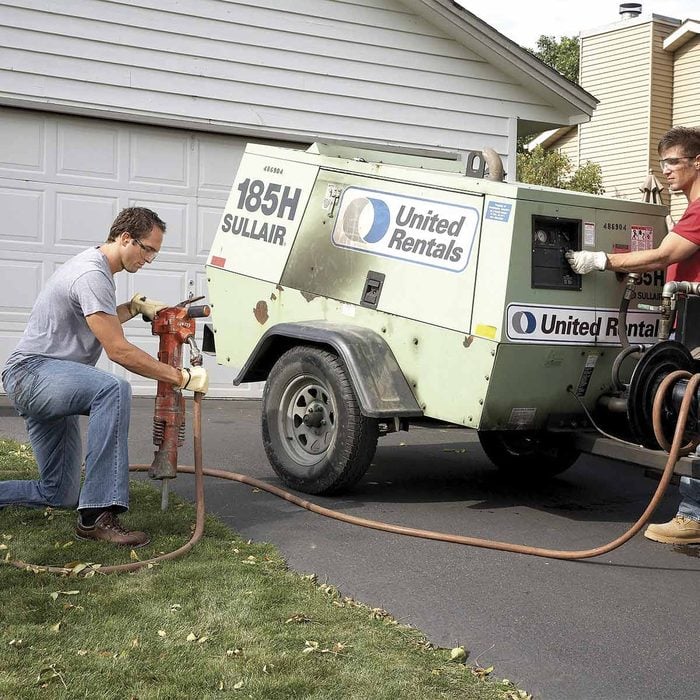
Hire a Jackhammer
A rented jackhammer powered by a big compressor is the all-time pick for large or thick slabs of concrete.
28 / 51
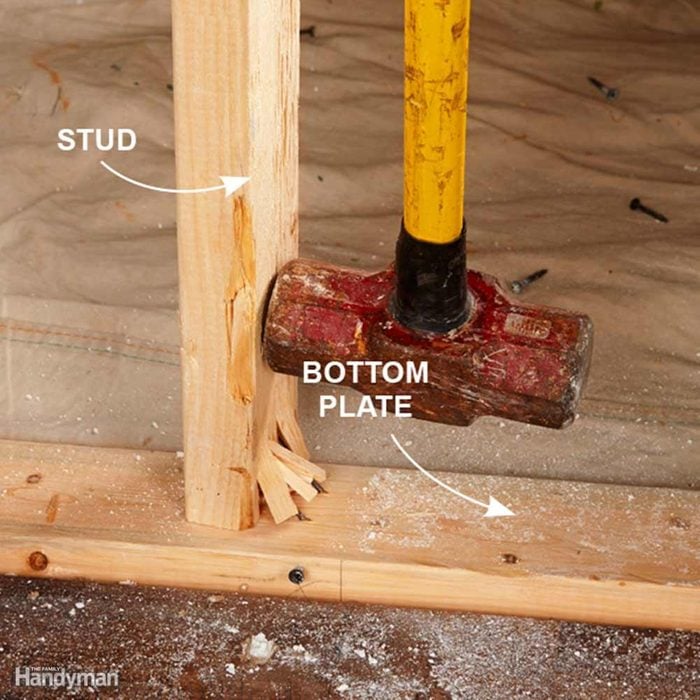
Knock Out Studs Sideways
A sledgehammer works slap-up for busting up studs, merely don't take a whack at the middle of the studs—they'll just wobble back and forth and probably bounce the head of the sledge right back in your management. Hit the studs every bit shut to the bottom plate as you lot can, only not so hard that you pull out the nails on the pinnacle plate—that'south a adept way to take hold of a falling stud in the noggin. Hit the bottom of each stud but far enough to dislodge it from the nails that were holding information technology. Then grab concord of it and pull it off the tiptop plate.
29 / 51

Tear Off Roof Shingles Yourself
Before you take on this large chore, get a bid from a contractor to make certain the savings are worth the strain. The cost of professional roof tear-off varies widely, depending on where you live, the style of the roof and how many layers of shingles it has. In well-nigh situations, you lot can look to save at least $1,000 by doing it yourself. In some situations, you'll save $3,000 or more.
30 / 51
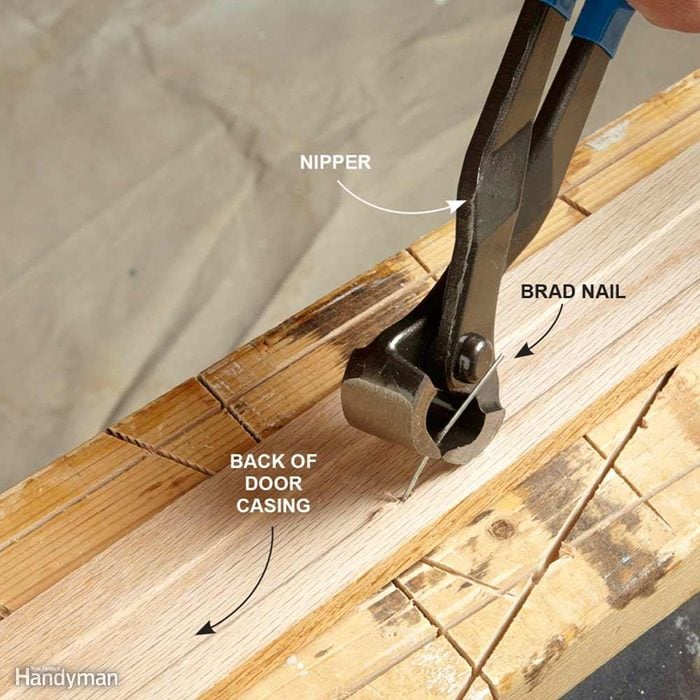
Pull Nails With a Nipper
If yous're replacing windows, doors or flooring and you want to salvage the trim, finish-nipper pliers are a handy tool to pull out brads and finish nails. The rounded end provides plenty of leverage, and if the nail breaks, you can always cut it down flush. Don't clasp too hard when gripping the smash or you may nip it off prematurely.
31 / 51
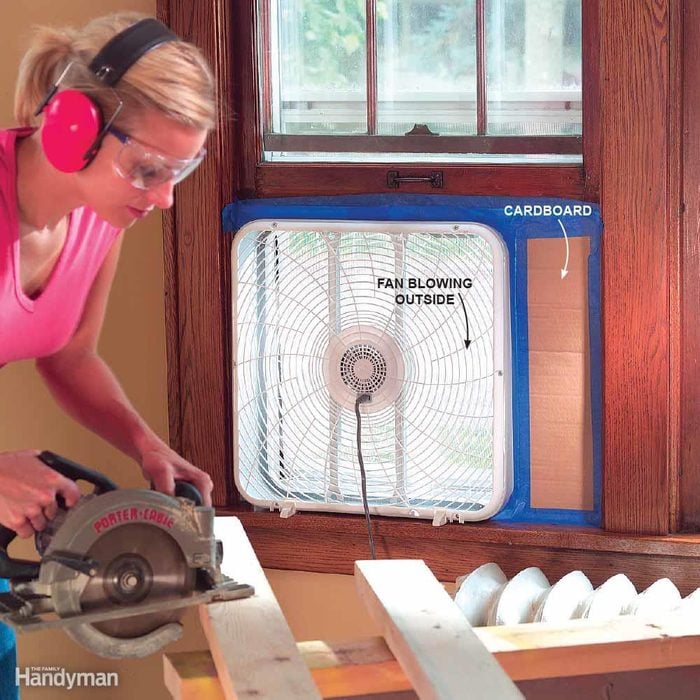
Drive Dust Exterior With a Fan
A fan bravado out the window helps to go along dust levels downwardly, and information technology creates a slight vacuum in the work expanse. That way, whatsoever gaps in your dust bulwark will let air menstruum into the work zone, but dust-laden air tin't sneak into surrounding rooms. This works and so well, in fact, that y'all may non even need a dust bulwark for light-dust projects, similar perchance in a small kitchen demolition project. But be sure to close large gaps around the fan with cardboard or plastic so wind gusts don't blow the dust right back inside. For good airflow, yous may have to crack open a door or window on the reverse side of the room. Plus: These cleaning tips will help you lot reduce household dust.
32 / 51
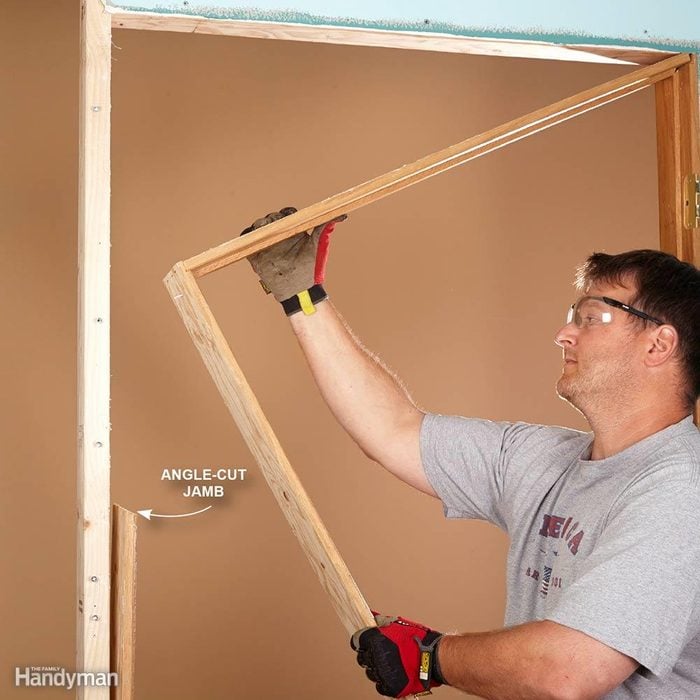
Cutting the Jamb and Pull
Yous can knock a jamb sideways out of its opening, but the nails or screws property information technology in identify put up strong resistance to the shear force you employ.
An easier way is to cut 1 of the sides in half with a reciprocating saw and and then pull the rest straight away from the framing. You lot can easily pull away whatsoever nails or screws holding the doorjambs in place simply past using the leverage of the jamb itself. Make your cut at an angle so the two cut sections don't wedge against each other, preventing you from pulling them apart. This aforementioned technique works for pulling out windows.
33 / 51
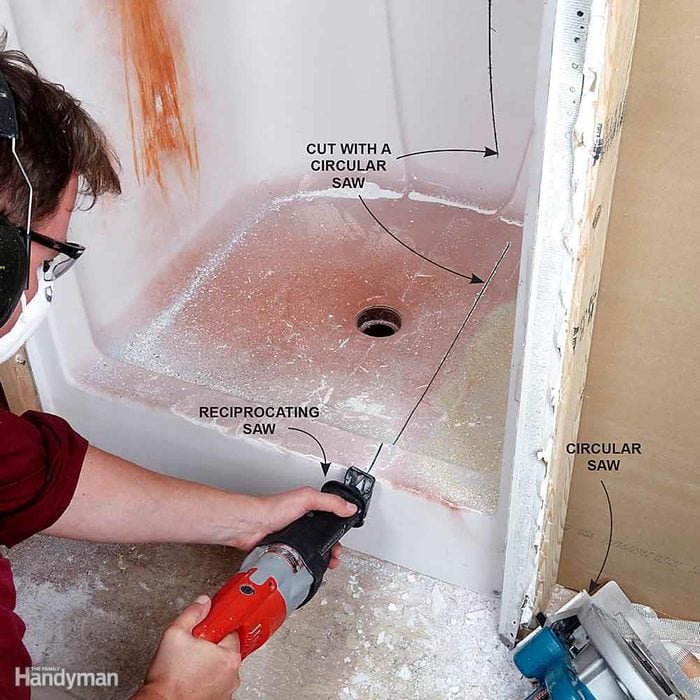
Cut Fiberglass Environs Into Pieces
Some bathrooms are built around a shower or tub environs. This means that even if you manage to remove all the fasteners holding it in place, the odds are you're non getting that environment out the door in ane piece. You're going to have to dice it up. Make the long cuts with a round saw, and end the curved areas with a recip saw. Wearable eye protection because fiberglass throws a bunch of chips when it'due south cut. And a grit mask is a must—fiberglass dust is not something y'all desire to breathe in. Nearly important, thoroughly investigate the areas where you'll exist making your cuts, to avoid severing whatsoever electrical wires or plumbing pipes. Plus: Cheque out this video showing how to break up and remove a cast iron bathtub.
34 / 51

Hearing Protection is a Must
When it comes to hearing protection as function of your safety gear toolkit, earmuffs provide the about protection from loud power tools and outdoor equipment, while earplugs are less restrictive and can easily be stored in your pocket. Here are some tips to choose the best hearing protection for your needs.
35 / 51
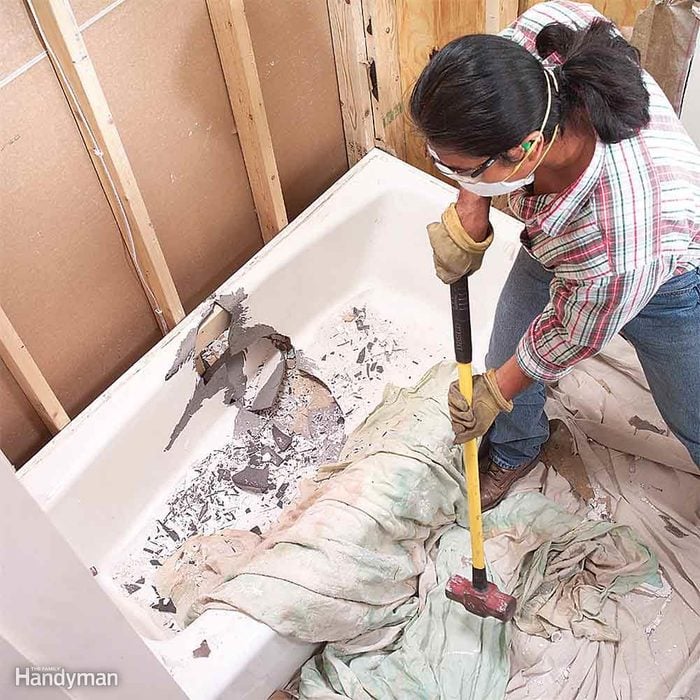
Save Time
Cast iron tubs are ridiculously heavy. Then unless it's a priceless collector's item, you don't want to have any part of moving i. Your best bet is to bust information technology up in place. Information technology can exist tough to get the swell started, so begin hitting the tub at the edge. Once it does get-go breaking, pound your way along the smashed edges.
Throw a tarp or thick sheet of plastic over the top to cut downwardly on flying shards of fe. And wear your safety gear, especially hearing protection—busting upward a cast iron tub is like having a front row seat at a church building bell convention. This tip works on just well-nigh anything brittle: quondam toilets, radiators, concrete laundry tubs, etc.
36 / 51
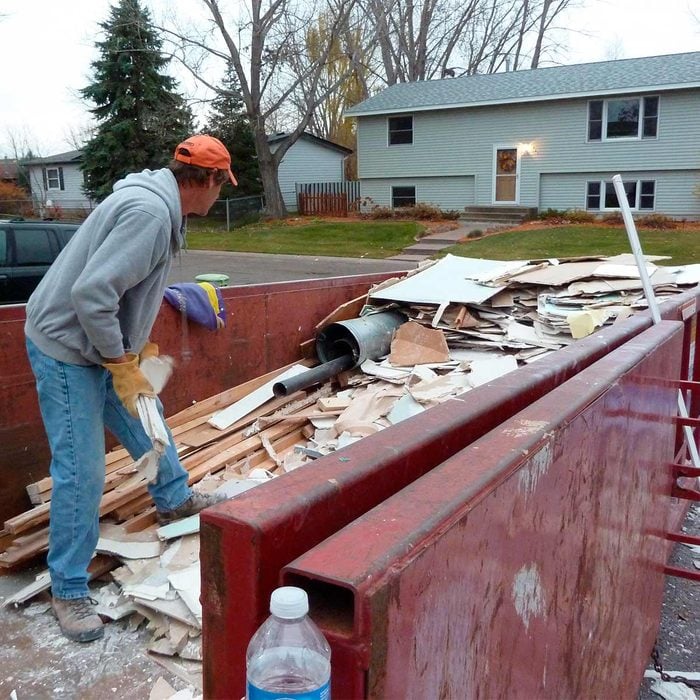
Save Coin on Dumpsters
Make sure you don't overpay for your demo waste matter removal. Click here to come across what Senior Editor Travis Larson did to salve some serious cash when ordering a dumpster.
37 / 51

Use the Right Blade
When using a reciprocating saw, choose a metal-cutting bract to slice through pipes. Brace yourself when cutting in a higher place your head. Dust and debris tin shake loose while cutting in older ceilings; always vesture safety glasses and a dust mask as needed. Plus: Check out these ten easy ways to cut metal fast.
- For cut through metal pipes and nails, utilise a fine-molar blade resembling a hacksaw.
- When cutting through wood, use a coarse bract.
- Use the coarsest-tooth blade to cut through plaster.
- Some blades are toothless. They're coated with tungsten carbide abrasive grit; use them for cutting stone, ceramic tile and cast iron when doing work like kitchen demolition.
38 / 51
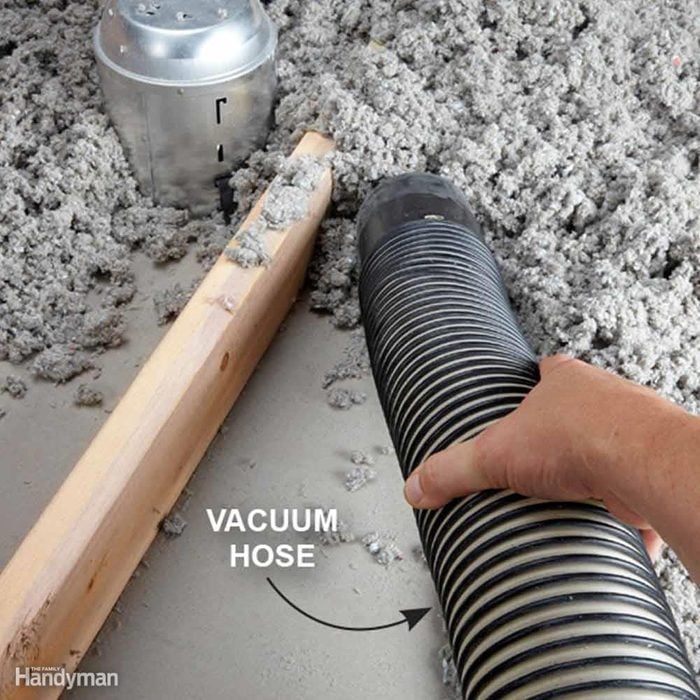
Suck Out Insulation
Fierce down a drywall ceiling is not a super-pleasant experience, but tearing down a ceiling that has fourteen in. of diddled-in insulation on top of information technology is a complete nightmare. Avert that gigantic mess past sucking out all the insulation in the attic earlier pulling downwards whatever drywall.
The huge vacuum required for the job costs about $220 a twenty-four hours to rent, but if your local rental center doesn't behave them, call an insulation contractor in your area. Many blow-in insulation installers also have the equipment to suck out the insulation. Merely this service isn't cheap: Expect to pay about $1 to $1.fifty per sq. ft. You lot might be able to get a deal if you apply the same company to accident in the new insulation. Make sure your insulation is fiberglass or cellulose. If you fifty-fifty suspect at that place's vermiculite insulation in the attic, get an expert stance before touching the stuff—it could contain asbestos.
39 / 51
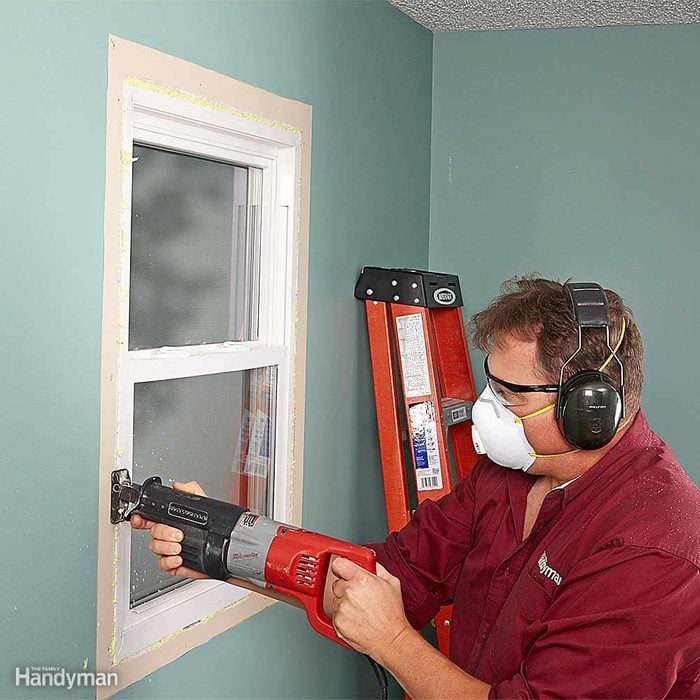
Cutting Around the Window With a Recip Saw
Spray foam insulation does an fantabulous job of insulating around a window—and a surprisingly good job of keeping the window or door in place. Even if y'all remove all the fasteners holding in a window, you lot won't be able to pull the window out until you deal with the spray foam. And then don't bother pulling the nails or screws out of an old window. Only run a recip saw between the window and the framing and cutting the fasteners and the cream at the same time. You lot may want a buddy on the other side of the window to go along it from falling out when y'all're done cutting around information technology. With a long enough blade, you can even slice through the nailing flange at the same time. That's important if you lot're trying to save the siding around the opening. Acquire how to forbid leaks with proper window installation.
40 / 51
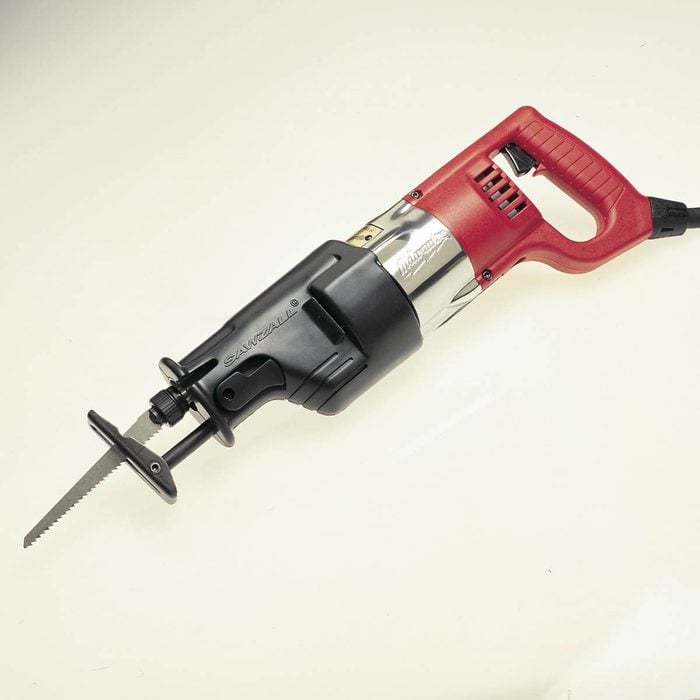
Reciprocating Saw: The Best Demo Tool Always!
Reciprocating saws, introduced in 1951, apace became favored tools of contractors. The reciprocating saw is a "gateway tool." It's the tool y'all'll own when you graduate to a serious DIYer tackling a repair or major remodeling like kitchen sabotage. Cheque out these 17 amazing inventions past DIYers.
41 / 51
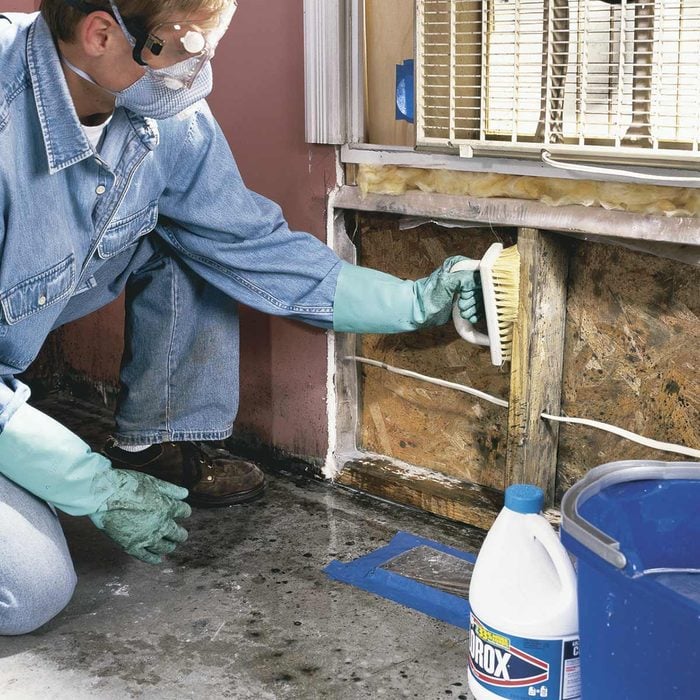
Discovering and Removing Mold
If you accept to remove mold concentrations covering more than a few foursquare feet, where the musty odor is stiff or where you find extensive h2o harm, we recommend that you take special precautions.
- Wearable erstwhile clothes and shoes that you tin can launder or throw away later the cleanup work.
- Wear special North-95 or P-100 respirators, in addition to goggles and gloves.
- Set an onetime box fan or a cheap new one in a window to ventilate the room while working. Throw it out when you're done cleaning, because the spores are almost impossible to clean off. Tape plywood or cardboard effectually the window openings then the spores can't blow back in.
- Wrap and record moldy carpeting in 6-mil plastic, and double-pocketbook mold-infested debris in garbage bags for disposal.
- To control airborne spores, moisten moldy areas with a garden sprayer while you work.
- Plow off your furnace and air conditioner and embrace ducts and doors to incorporate spores.
- Keep your wet/dry vacuum exterior when y'all vacuum.
42 / 51
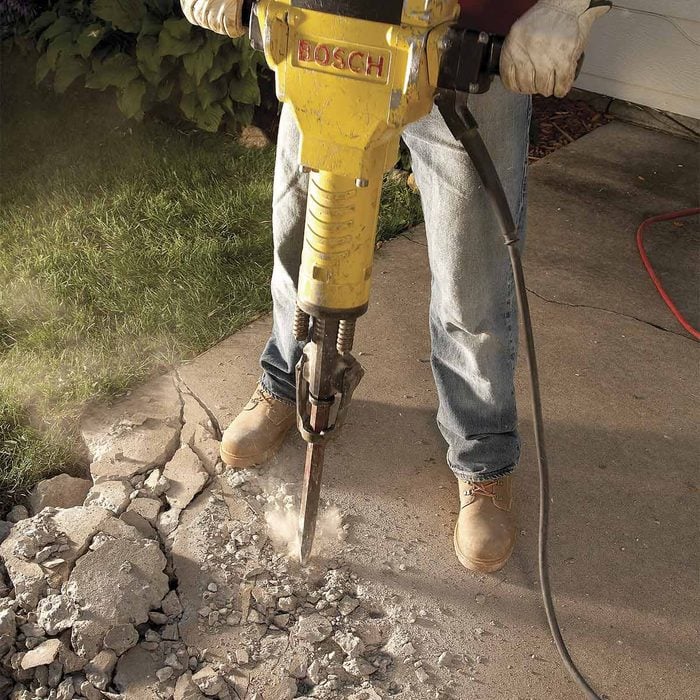
Jackhammer Technique
When breaking up concrete, take small bites with a jackhammer. If you begin to drill a hole without creating a crevice, STOP! Otherwise, you lot'll become the bit stuck in the concrete.
44 / 51
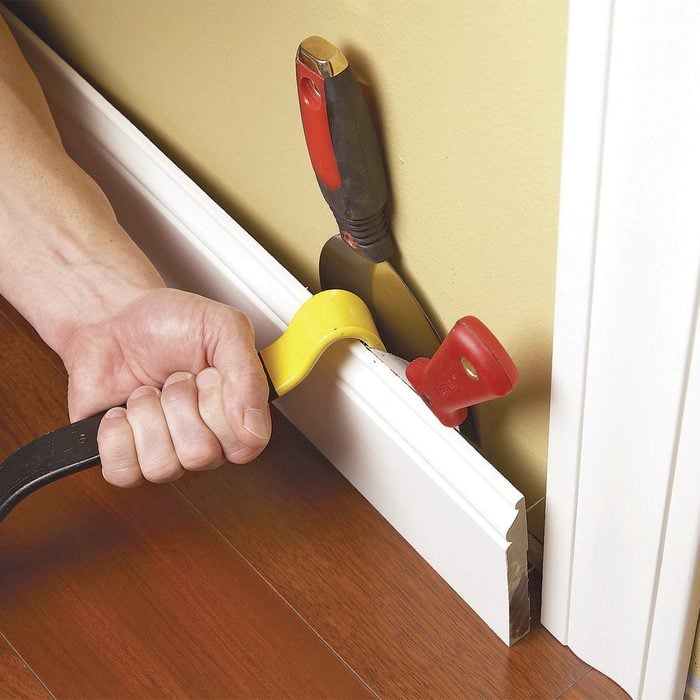
Remove Trim with Minimal Damage
Jam a pry bar between the two knives and twist sideways. Catch the boom shaft near the wood with a pair of nippers. Gyre the tool caput against the wood to pull the nail out the back side of the trim.
45 / 51
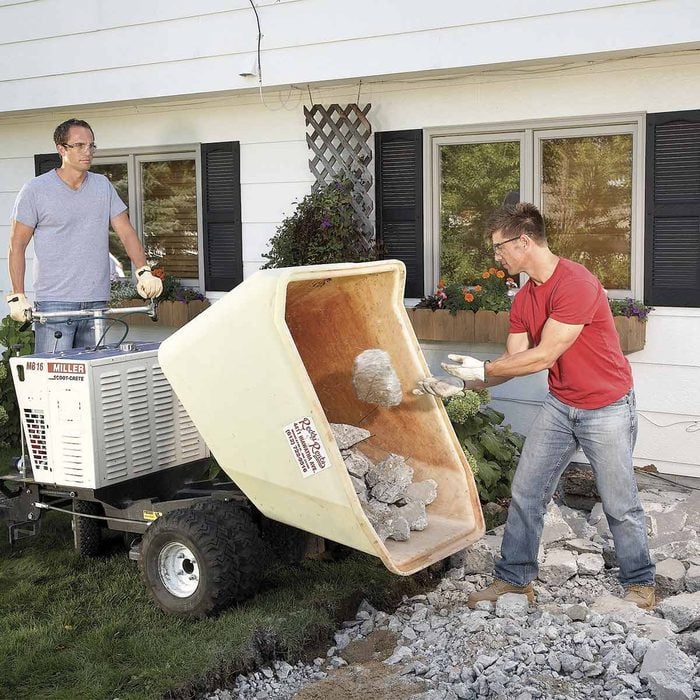
Ability Wheelbarrow
A rented ability wheelbarrow makes outdoor rubble removal a cakewalk—particularly if you can find someone else to do the loading.
47 / 51
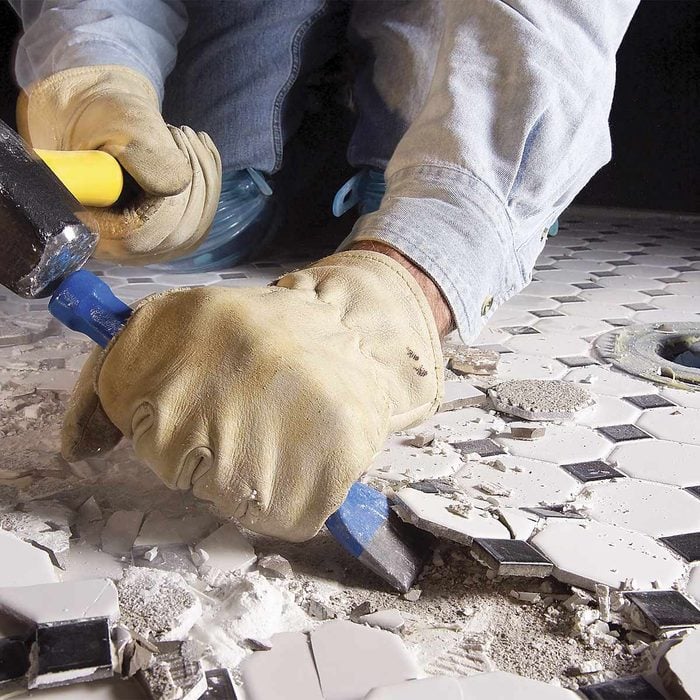
Remove Tile from a Concrete Floor
Use a three/4- or 1-in. masonry chisel and a two-lb. paw maul. Start at a broken tile or between tiles where the grout has loosened. Work the chisel nether the tiles, forcing them loose. Strike the face of stubborn tiles to break them up for easier removal. Wear prophylactic glasses, gloves, pants and a long-sleeve shirt, since hammering the tile sends abrupt shards flight. Also wearable a dust mask.
48 / 51

Determining a Load-Bearing Wall
Only some of your walls are needed to concur upwards your business firm. These are called bearing walls. The rest of the walls, the partition walls, are merely there to split rooms. You can remove either type of wall, only if the wall is load bearing, you have to accept special precautions to support the structure during removal, and to add a beam or other form of support in its place. Ceiling or floor joists that are spliced over the wall, or end at the wall, hateful the wall is bearing. Look for these from the attic. Walls that are stacked may be load bearing. Find these by measuring or past studying a flooring programme of your firm. In some cases, you may not be able to tell for sure whether a wall is begetting. If y'all're not certain, hire a contractor or structural engineer to help you lot figure it out.
49 / 51
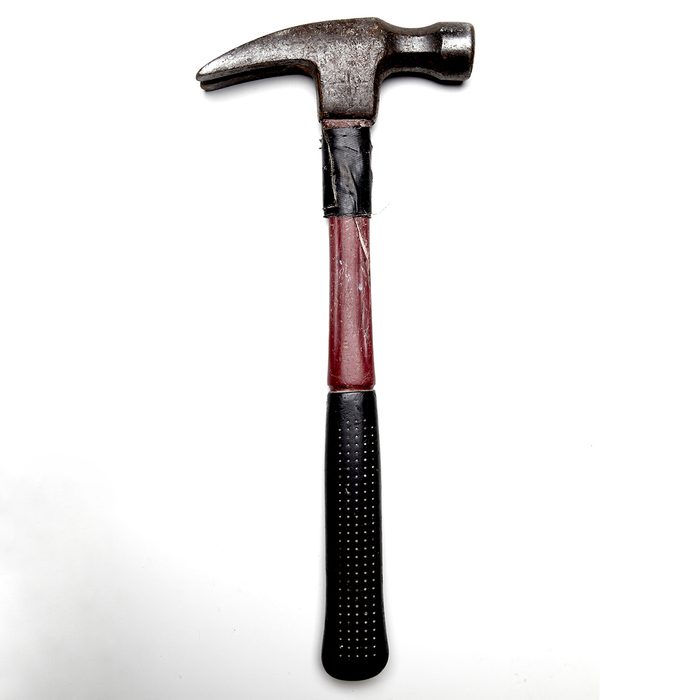
Rip Hammer
Rip hammers have a straight claw instead of a curved claw. The hook serves as a mini-axe to split woods blocks or chop off protruding board edges. Y'all can also utilise ripping hammers for trigger-happy down drywall, especially long-handled framing models.
l / 51

Take Out a Toilet
Don't be intimidated by the job of removing a toilet. Spotter this video tutorial for everything you demand to know to remove a toilet yourself.
51 / 51
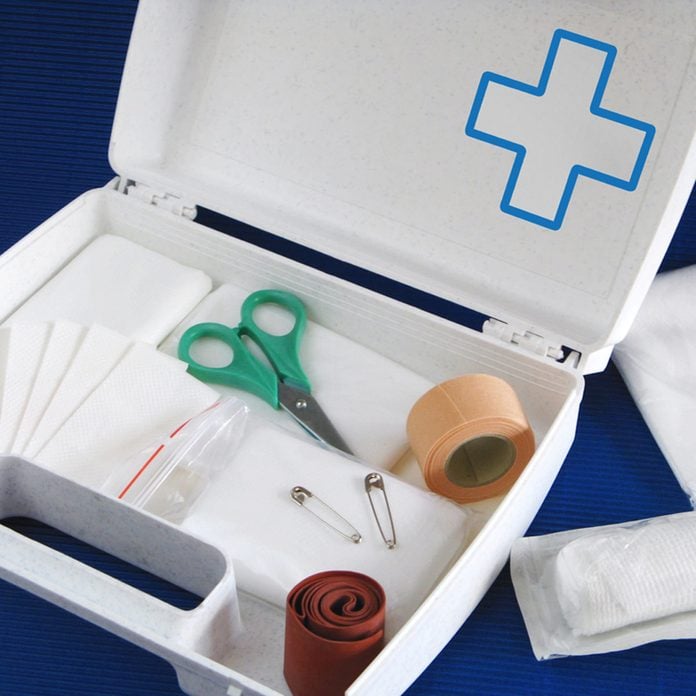
Keep a First Assistance Kit Close
No thing how conscientious yous are, in that location will likely come a time when you or someone you're working with volition need kickoff aid during a projection. Keep a kit stocked with bandages, adhesive record, gauze and an antibiotic ointment. Make a second kit to continue in your car.
Originally Published: March 03, 2021
Source: https://www.familyhandyman.com/list/35-diy-demolition-tips/

Publicar un comentario for "what nails to use fir overlayment on concrete"